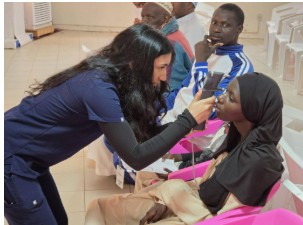
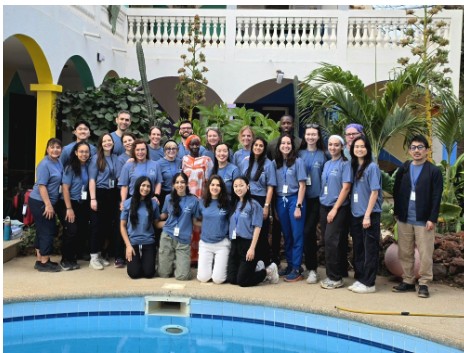
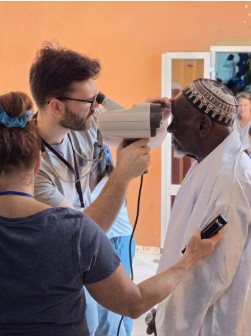
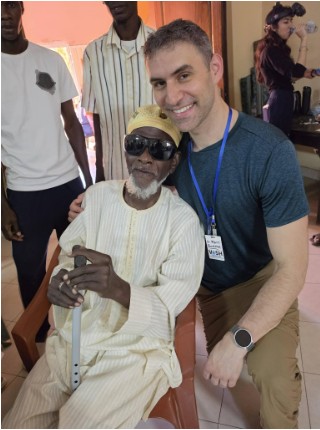
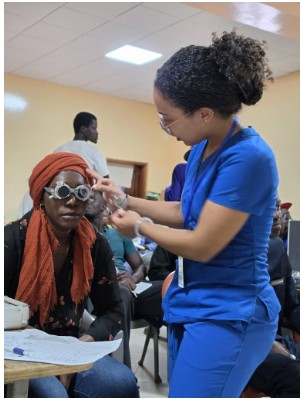
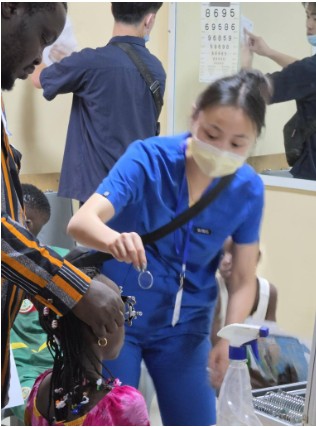
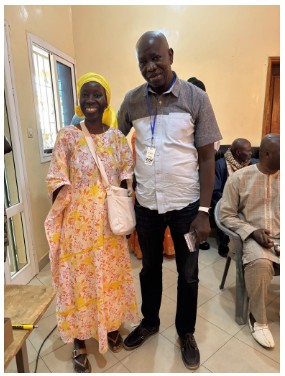
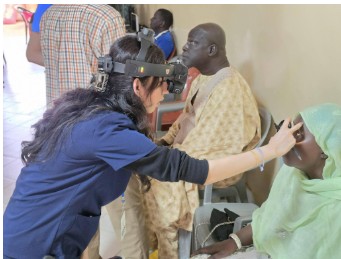
o 2026 VOSH-Sudeste / SUNY School of Optometry team of 25, along with our incredible Senegalese sponsor and coordinator, Mame Dabo, and her family, hosted a successful 5-day primary eye care clinic in Saly, Senegal, de março 21-26, 2026. The clinic was held at the Saly Community Center, a location that truly embodied the spirit of community, with local volunteers helping with patient registration and returning educators providing essential translation services.
The volunteer team included 10 optometristas, 8 estudantes de optometria, e 8 returning participants. Ongoing collaboration with faculty and third- and fourth-year students from SUNY College of Optometry has been instrumental in supporting VOSH Southeast’s mission to deliver comprehensive primary eye care, while also offering a valuable educational and training experience. Volunteers without prior eye care experience also played essential roles, contributing in many ways to the clinic’s overall success. The high level of care provided would not have been possible without the dedication and efforts of every volunteer involved.
Over the course of the clinic, 3615 individuals had their eyes examined and most were given glasses, either for near or for distance vision, ou ambos. além do que, além do mais, 1,500 pairs of sunglasses were distributed, e 783 pairs of new prescription glasses were ordered through OneSight EssilorLuxottica Foundation Changing Life Through Lenses program. These individuals are expected to receive their new glasses in May 2026.
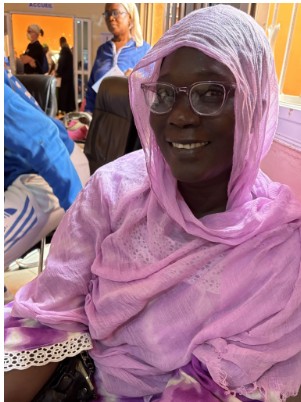
For many of these individuals, receiving a pair of glasses was life-changing. For some, it meant being able to work and provide for their families. Others could finally sew, read, or continue their education; safety eyewear helped protect those with only one usable eye.
Patients were assessed for various eye conditions, incluindo glaucoma, catarata, eye infections, severe allergies, olho seco, pterígio, and corneal foreign bodies. They were often provided with prescription and non-prescription eye drops as needed. In some cases, an annual supply of glaucoma drops could help prevent irreversible blindness and allergy drops can help to quell itching and pain.
The mission’s future goals for this clinic include-
- Gaining a deeper understanding of access to or lack of eye care.
- Continuing to provide primary eye care, óculos, and eye drops in an annual clinic.
- Partnering with local and/or global ophthalmology groups to provide medical and surgical care.
- Providing financial support for the ophthalmologic services.
- Fostering ongoing education and training in eye care.
We owe the success of this impactful mission to the generosity of several individuals and organizations who contributed financially and in-kind. Special thanks go to CooperVision, Programa de Missões Médicas Alcon Cares, Americanos, Farmácia Allina, RestoringVision.org, Visão nacional, Visão VSP, Seguir em frente, Ótica Estrela do Norte, LLC, and the OneSight EssilorLuxottica Foundation. We also appreciate the unwavering support from VOSH Southeast and SUNY College of Optometry.
A heartfelt thank you goes out to the core volunteers, the communities of Saly and Mbour for allowing us to use their facilities and to provide our services, the local translators who ensured smooth communication, Dr. Sow and the ministry of health for their professional support, Mame’s family and friends for their nourishing meals and transportation, and especially to Mame Dabo for her leadership and vision that made this mission possible.
Fatos importantes
- Globally, finalmente 2.2 bilhão de pessoas têm deficiência visual para perto ou para longe. For at least 1 billion of these people, a deficiência visual poderia ter sido evitada ou ainda não foi abordada.
- The leading causes of vision impairment and blindness are refractive errors and cataracts.
- It is estimated that 2 out of 3 people in low-income countries who need eyeglasses don’t have access to them.
- além do que, além do mais, 1 dentro 2 people globally who need cataract surgery don’t have access to that surgery.
- Vision impairment poses an enormous global financial burden, com o custo global anual de produtividade estimado em US$ 411 bilhão.
- Vision loss can affect people of all ages; Contudo, a maioria das pessoas com deficiência visual e cegueira tem mais de um ano de idade 50 anos. (WHO 10 Fevereiro 2025)